

Hand-Embroidered Pashmina from Kashmir
Read more Show less
The price of a hand-embroidered pashmina varies according to the quality of the fibre, the embroidery time, the complexity of the pattern and the number of colours used, whether the embroidery is monochrome or multicoloured. Discover also our complete pashmina collection.
Hand-embroidered pashmina: exceptional craftsmanship
The creation of a hand-embroidered pashmina involves several master Kashmiri artisans, from weaving through to embroidery. This meticulous collective work creates a completely handcrafted piece, with each stage requiring experience, precision and patience.
The stages involved in creating an embroidered pashmina
The creation of an embroidered pashmina begins with weaving the fabric, followed by choosing the pattern and transferring it onto the cloth before the needle embroidery begins. Each embroidery requires many hours of work and great precision as the design gradually takes shape.
Kashmir embroidery: refinement and artisanal precision
Kashmir embroidery is traditionally carried out by artisans specialising in this meticulous craft. To preserve their eyesight and maintain the precision of their stitches, they generally embroider for no more than four hours a day. This expertise makes it possible to create detailed patterns that give each embroidered pashmina its unique character. To discover pashmina without embroidery, explore our 100% cashmere pashmina.
Hours of embroidery to create a unique piece
Depending on the size and complexity of the pattern, an embroidered pashmina can require many hours of work. A pashmina embroidered in a single colour already requires great precision, while a design composed of several colours takes even longer because the artisan must change thread regularly throughout the embroidery. Each flower, arabesque or detail is worked by hand with a needle, stitch by stitch, giving each piece its unique character. To discover another interpretation of pashmina combining cashmere and silk, explore our Nepal cashmere and silk pashmina.

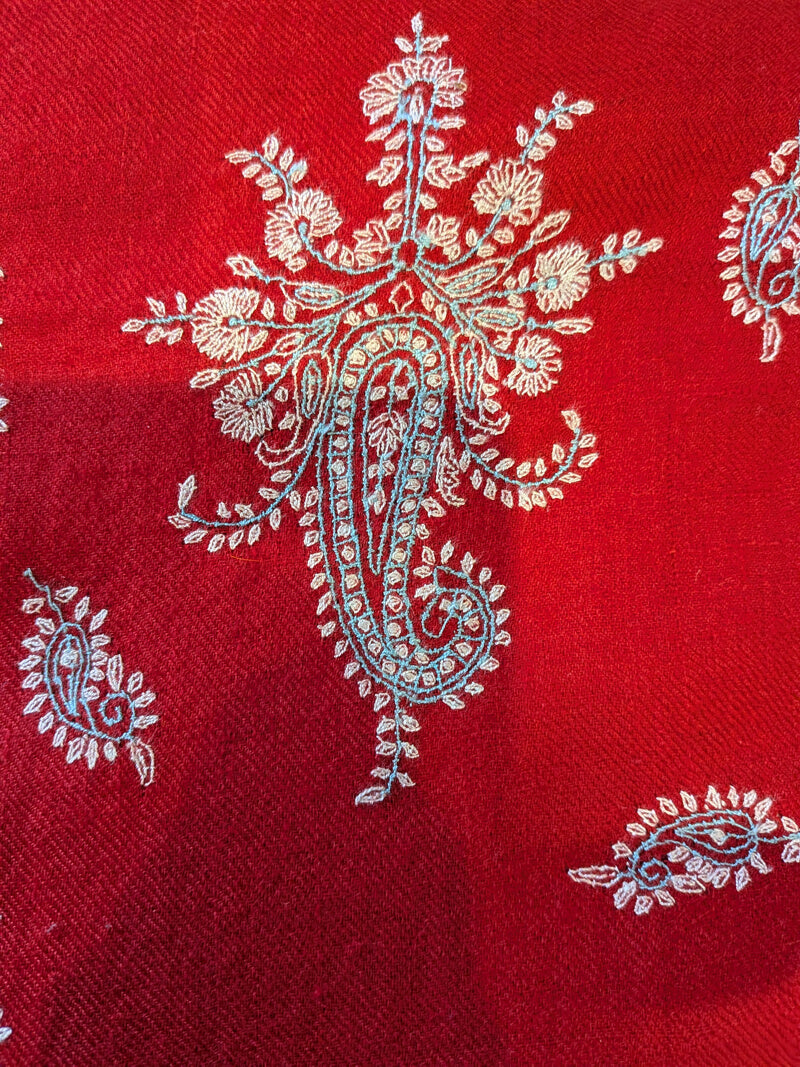
Hand-Embroidered Red Pashmina

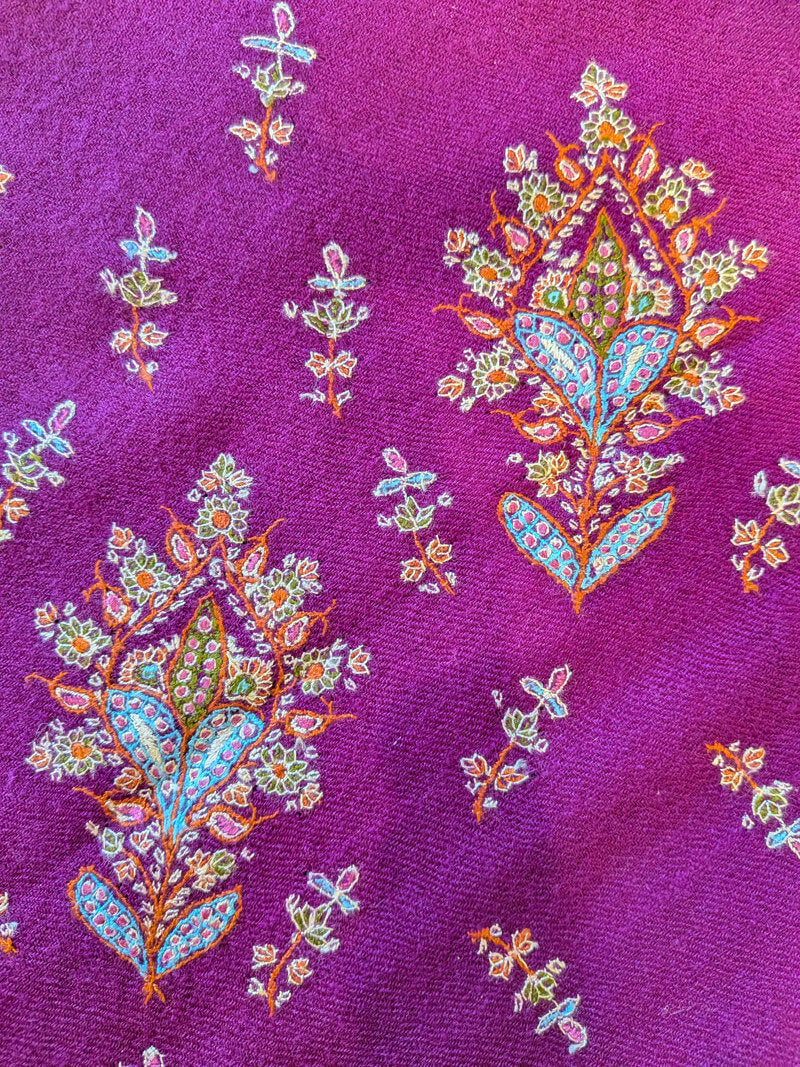
Hand-Embroidered Raspberry Pink Pashmina

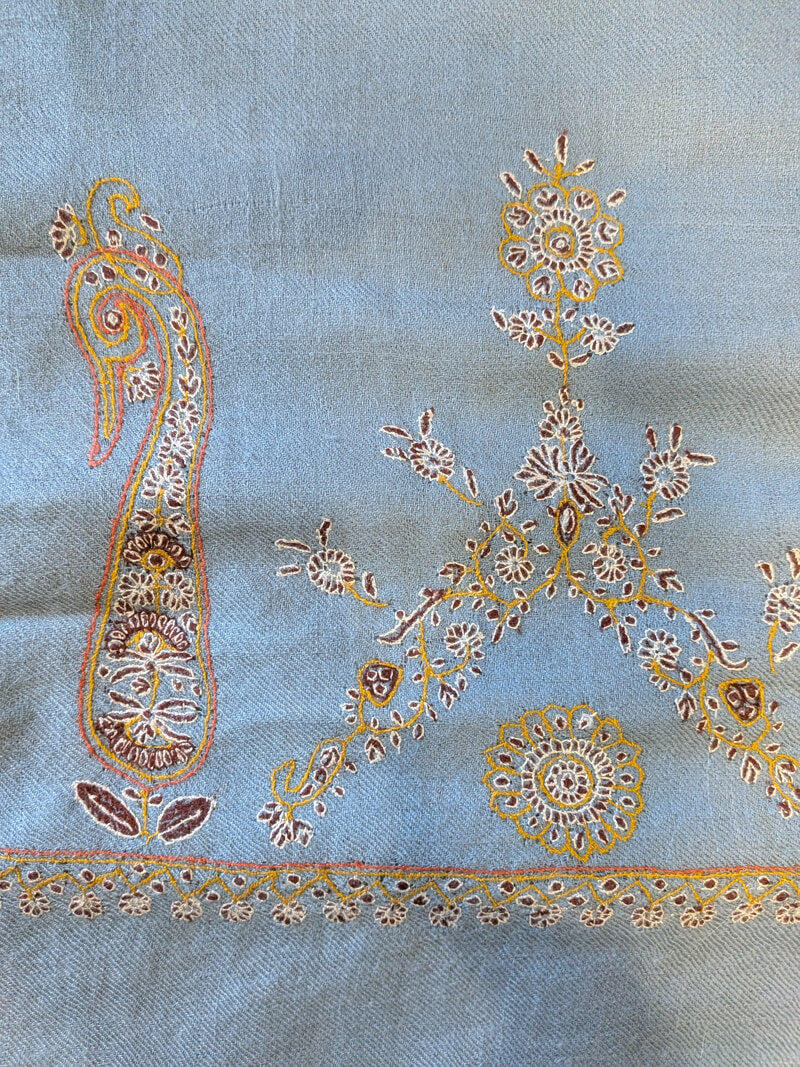
Hand-Embroidered Grey-blue Pashmina
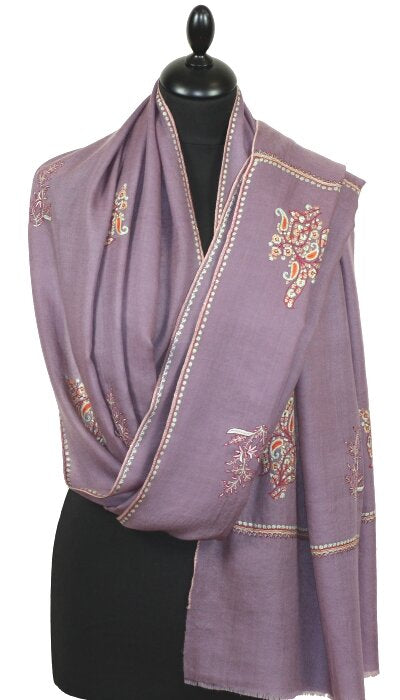
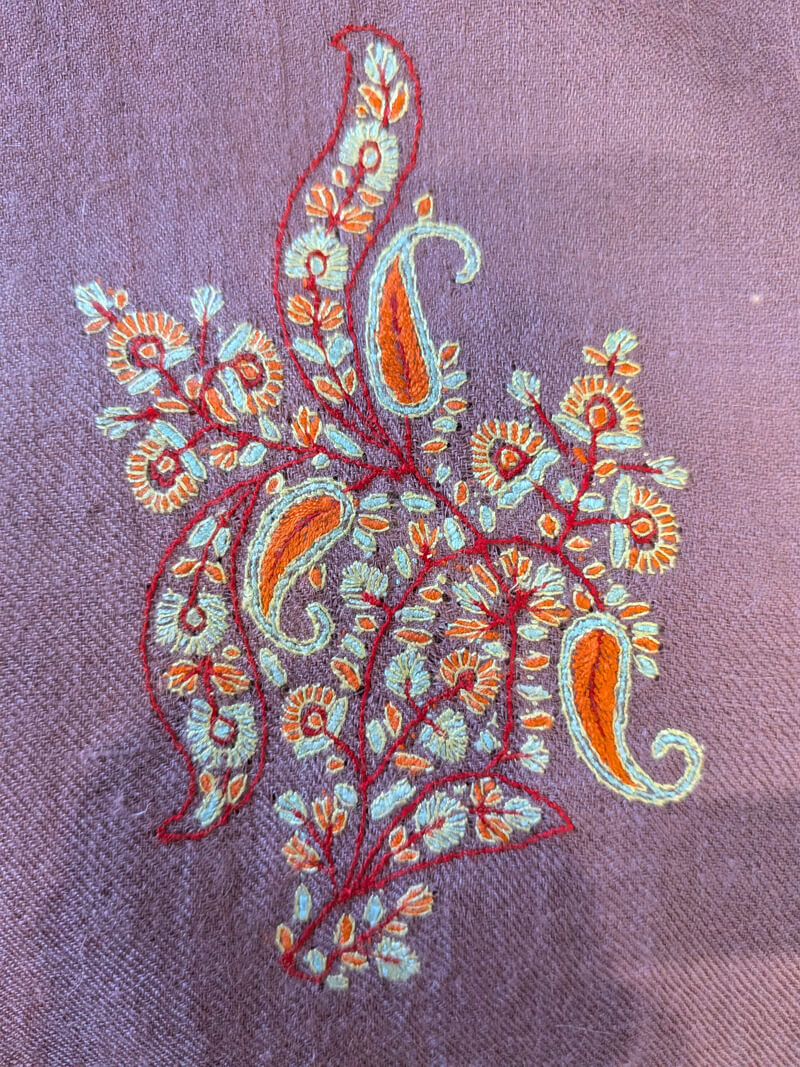
Hand-Embroidered Mauve Pashmina
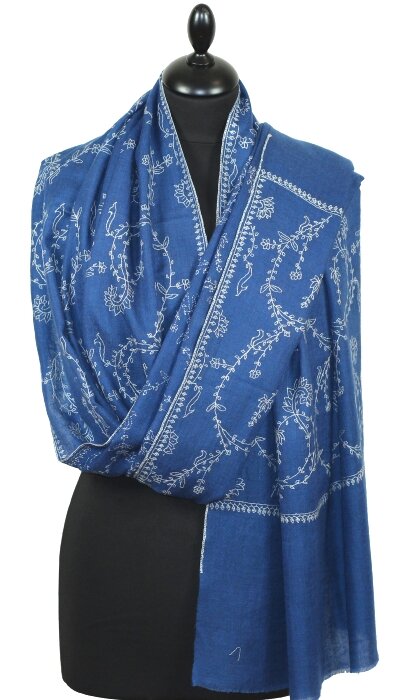
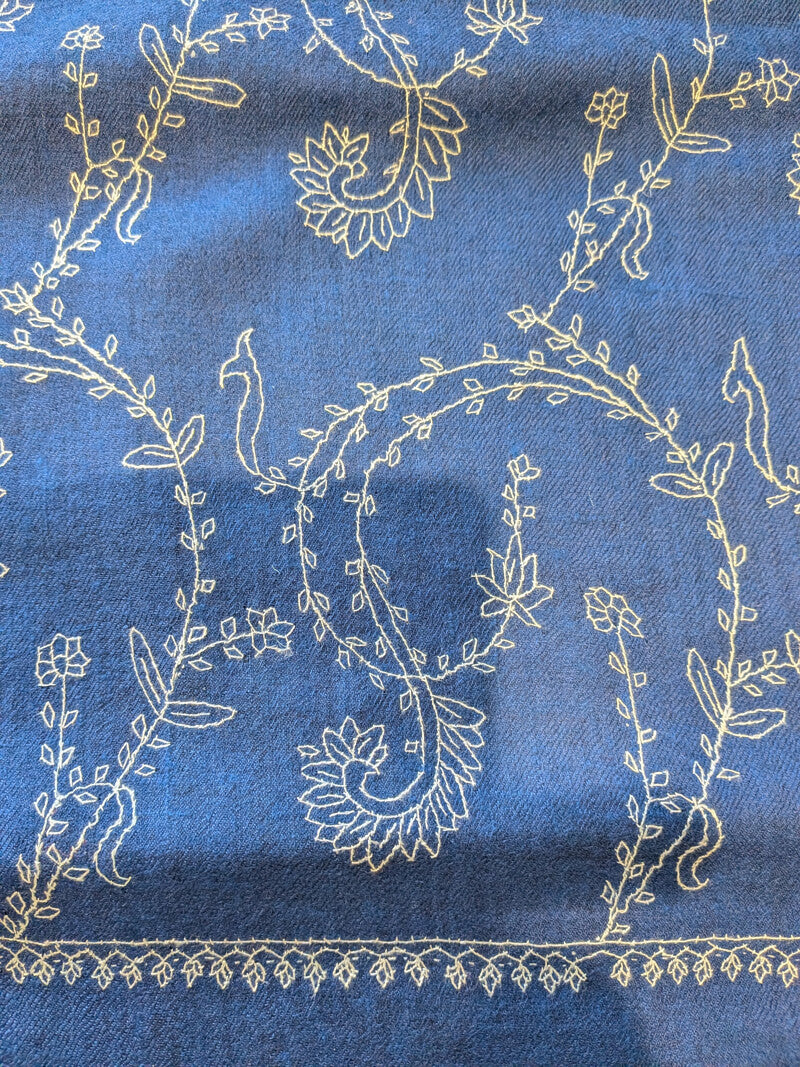
Hand-Embroidered Azure Blue Pashmina

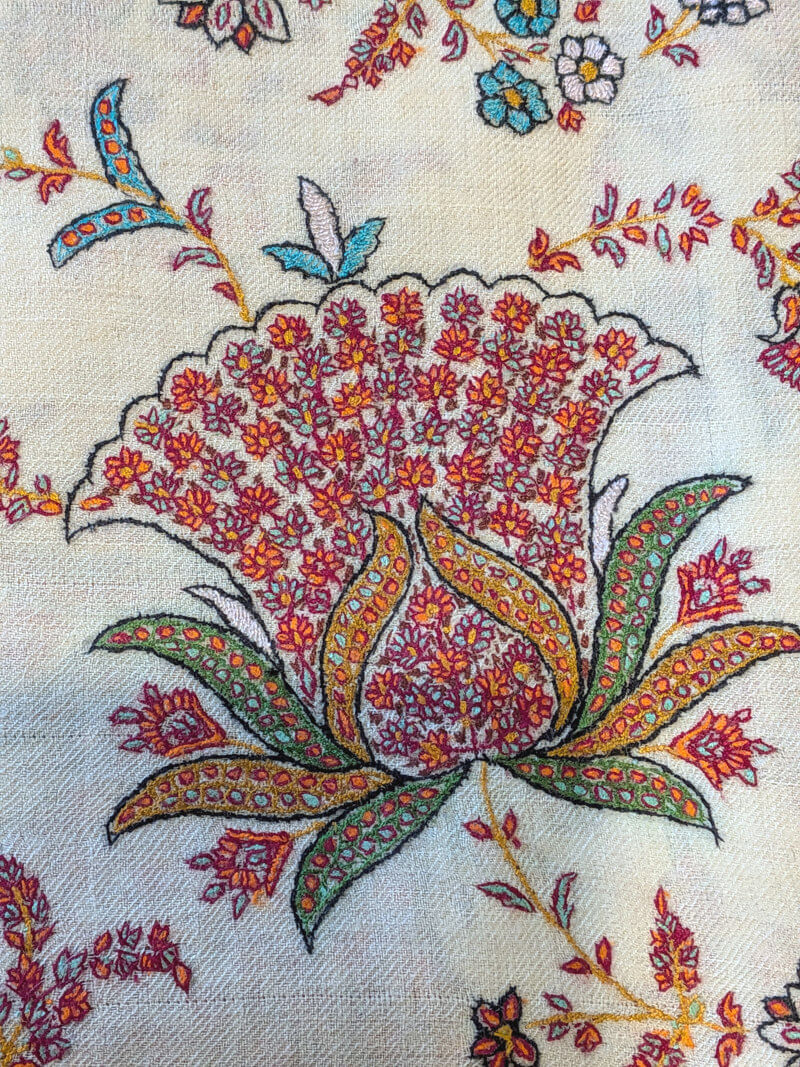
Hand-Embroidered Ivory Pashmina

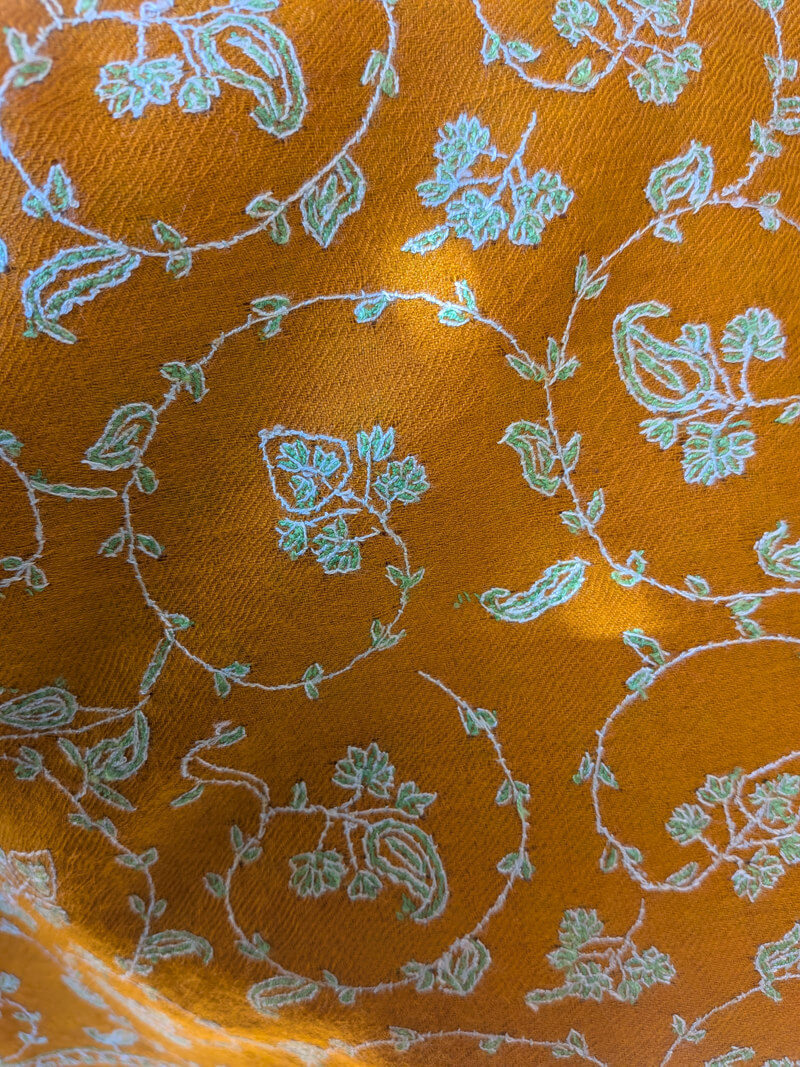
Hand-Embroidered Saffron Orange Pashmina

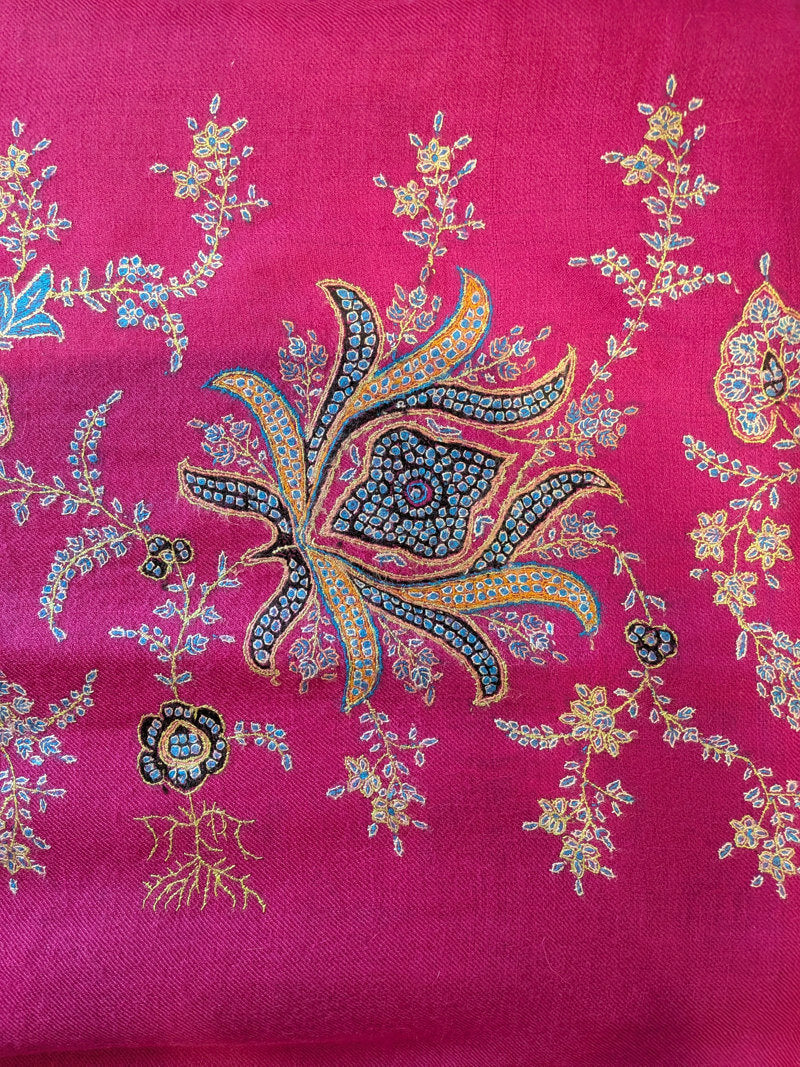
Hand-Embroidered Indian Pink Pashmina

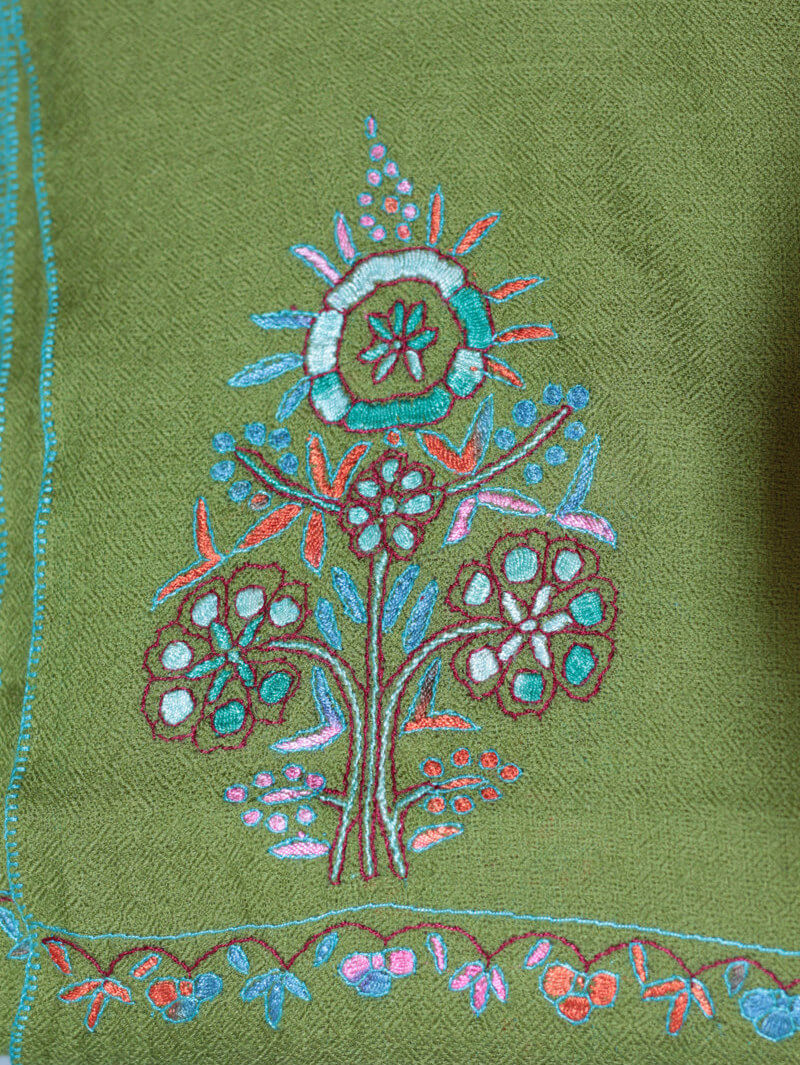
Hand-Embroidered Olive Green Pashmina

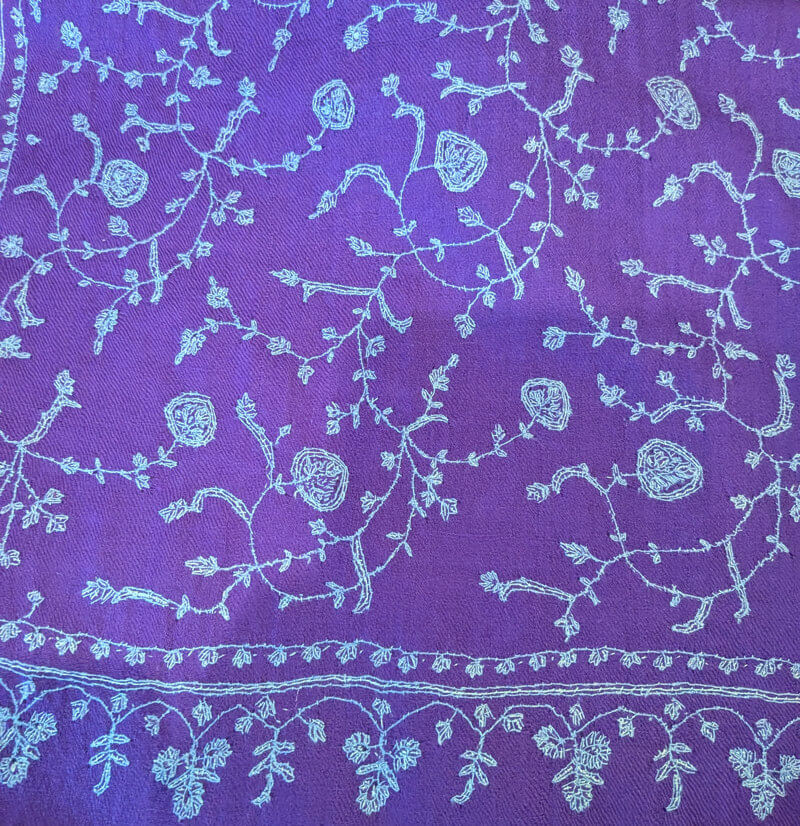
Hand-Embroidered Purple Pashmina

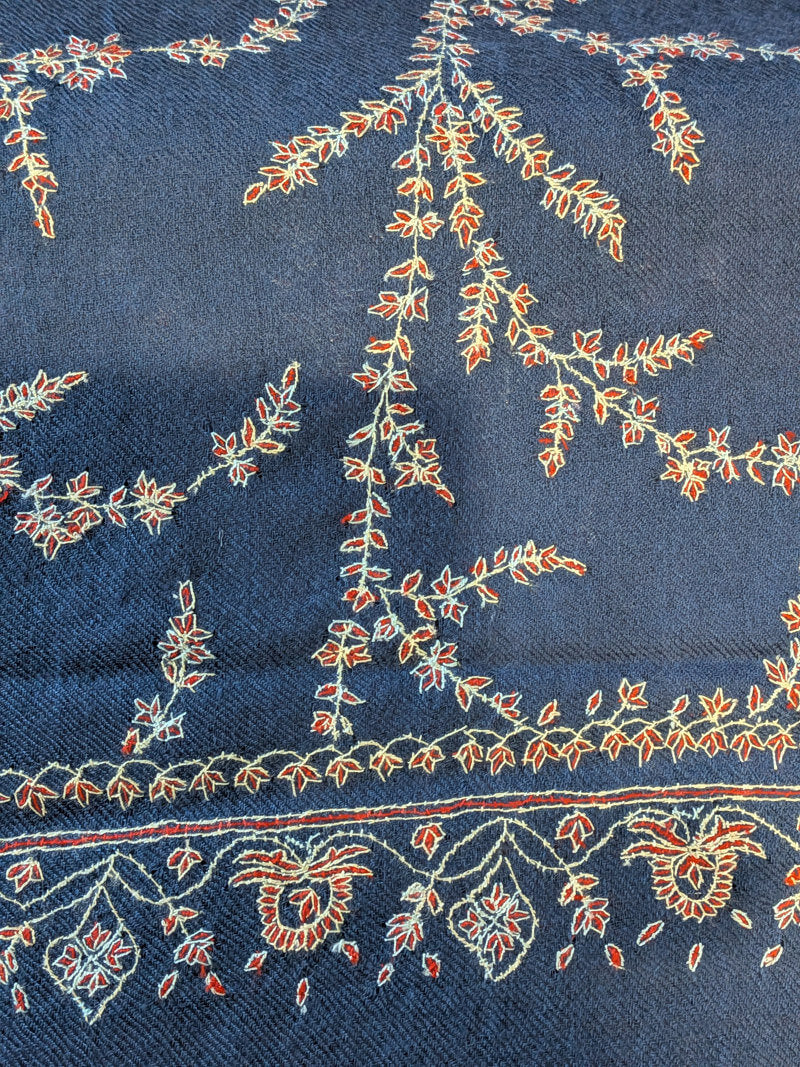
Hand-Embroidered Denim Blue Pashmina

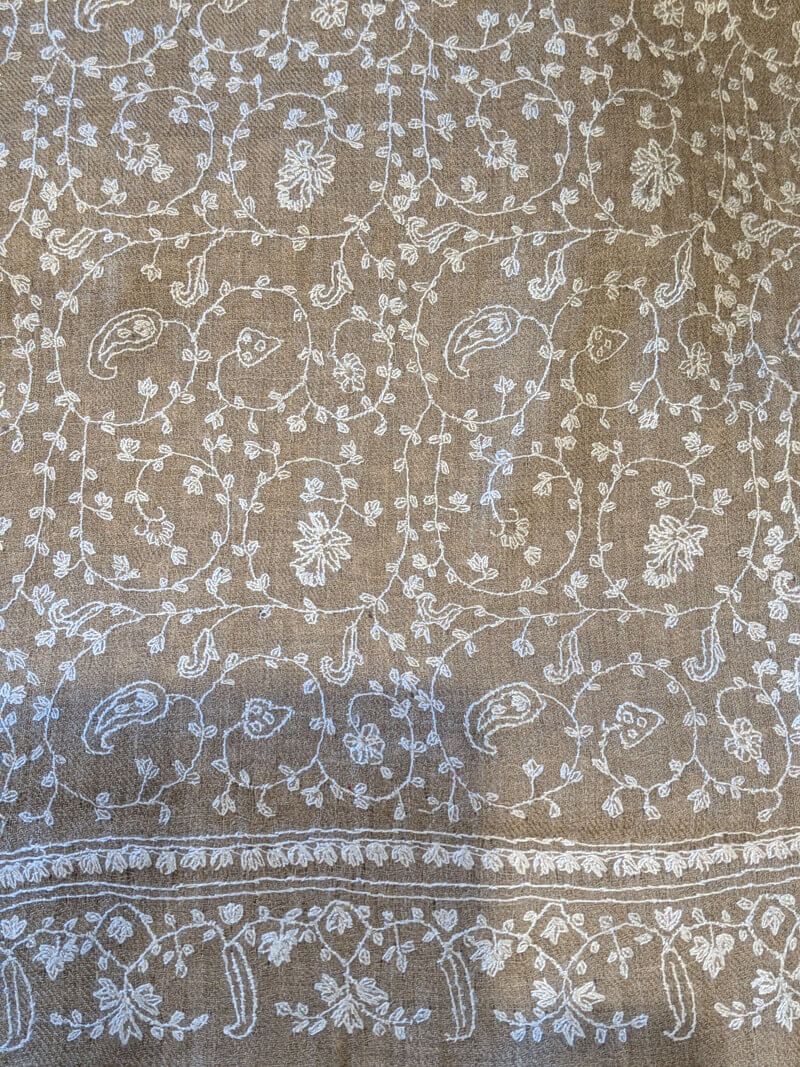
Hand-Embroidered Grey-beige Pashmina
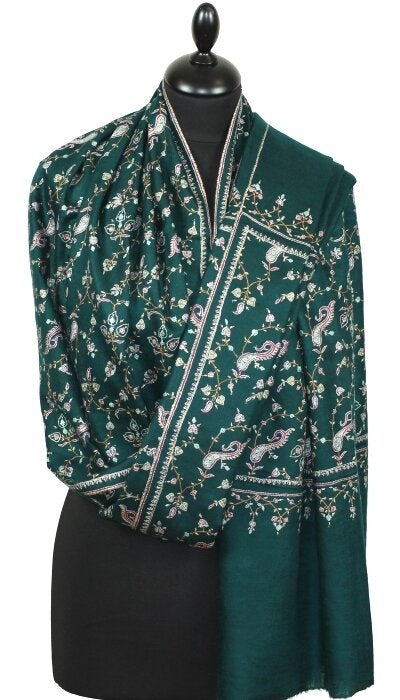
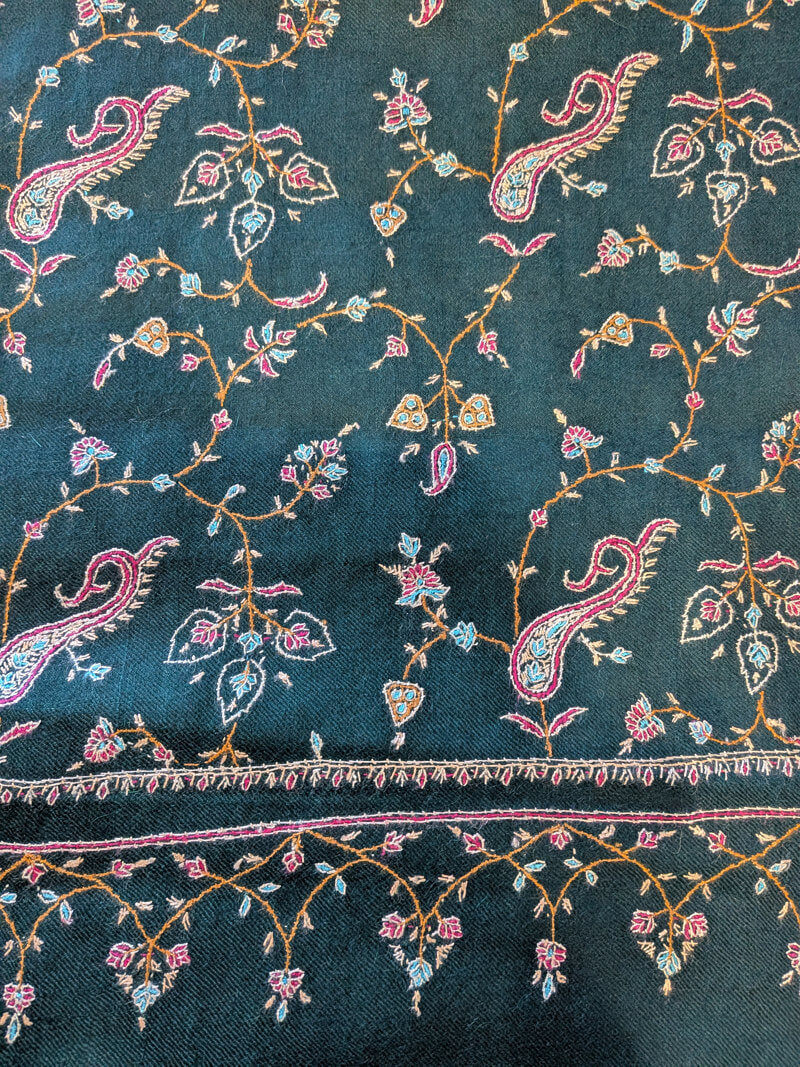
Hand-Embroidered Imperial Green Pashmina
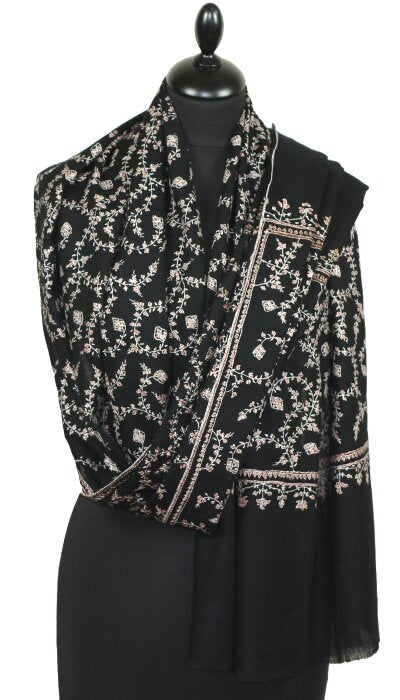
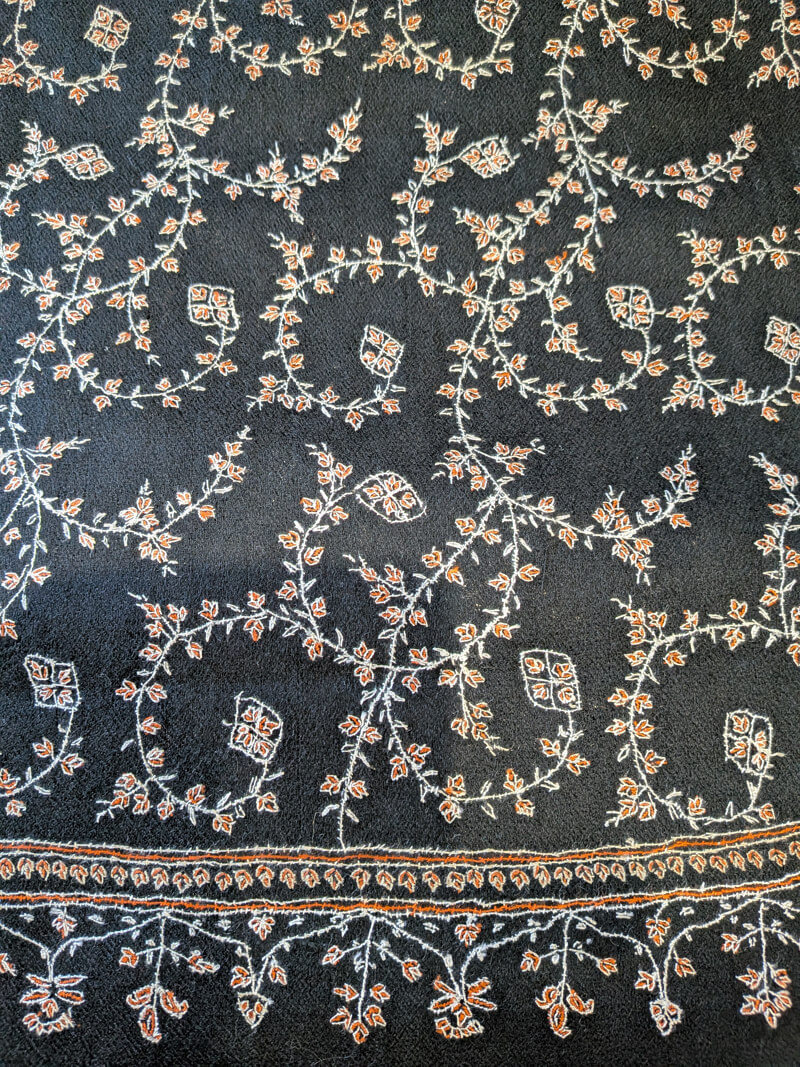
Hand-Embroidered Black Pashmina
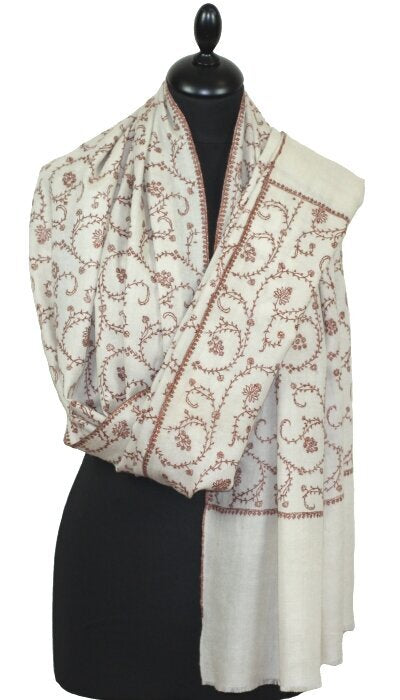
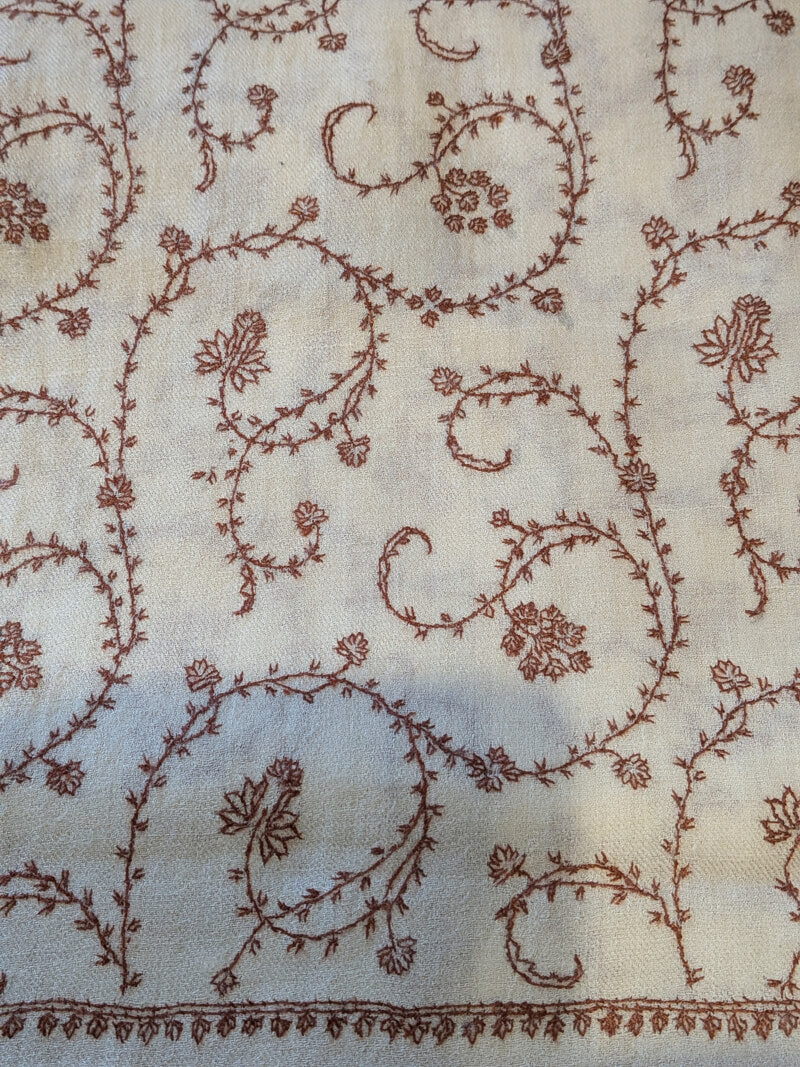
Hand-Embroidered Ivory-Beige Pashmina
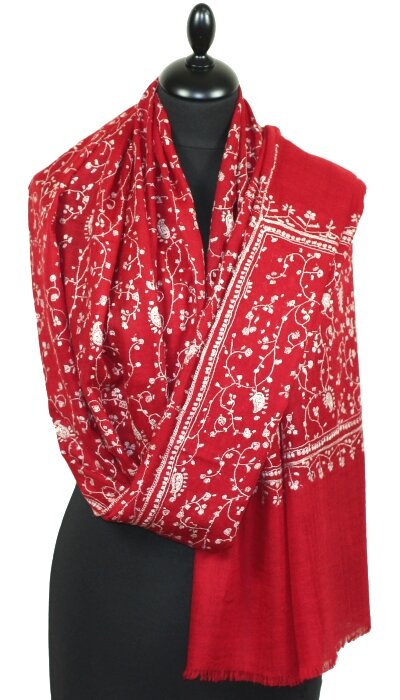
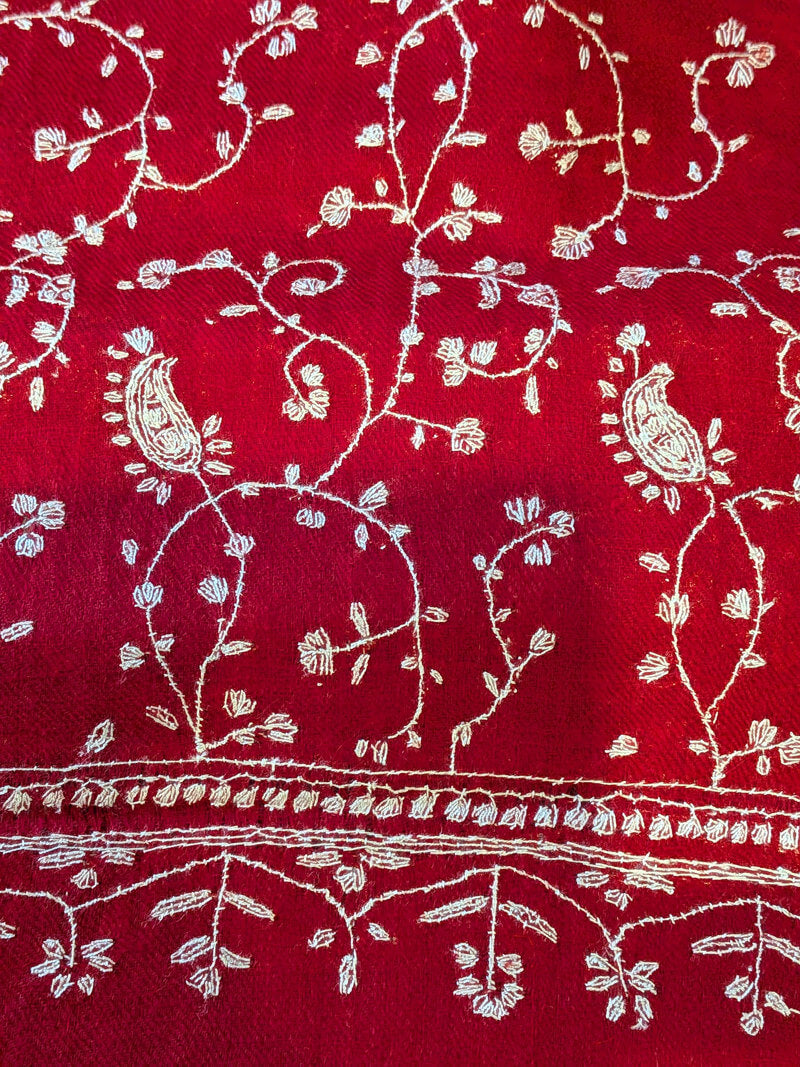
Hand-Embroidered Red Pashmina
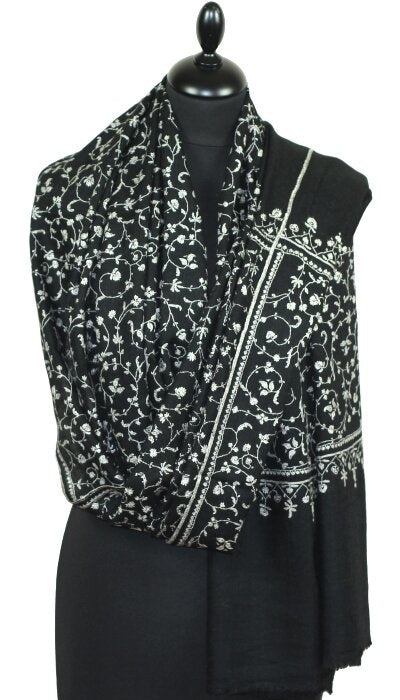
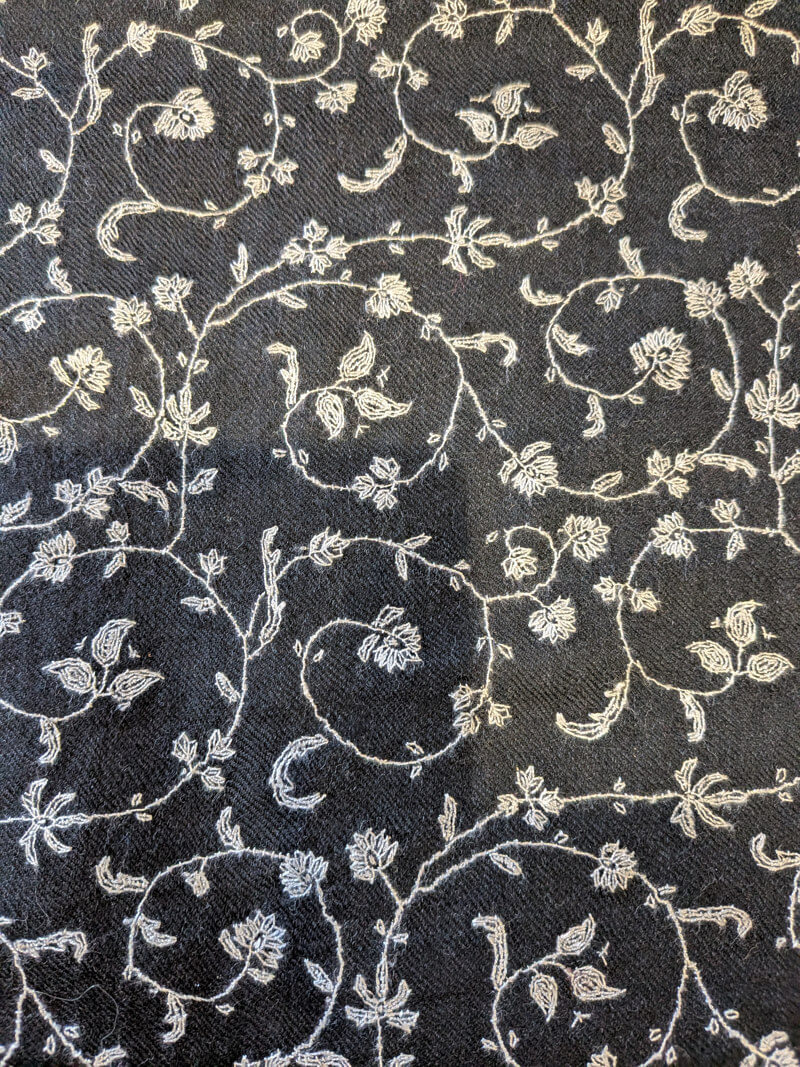
Hand-Embroidered Black Pashmina
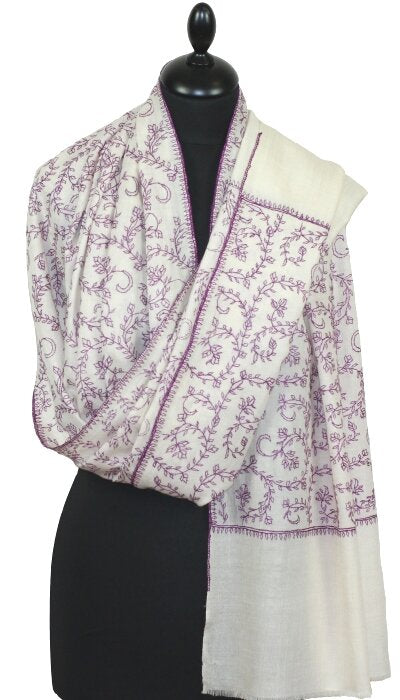
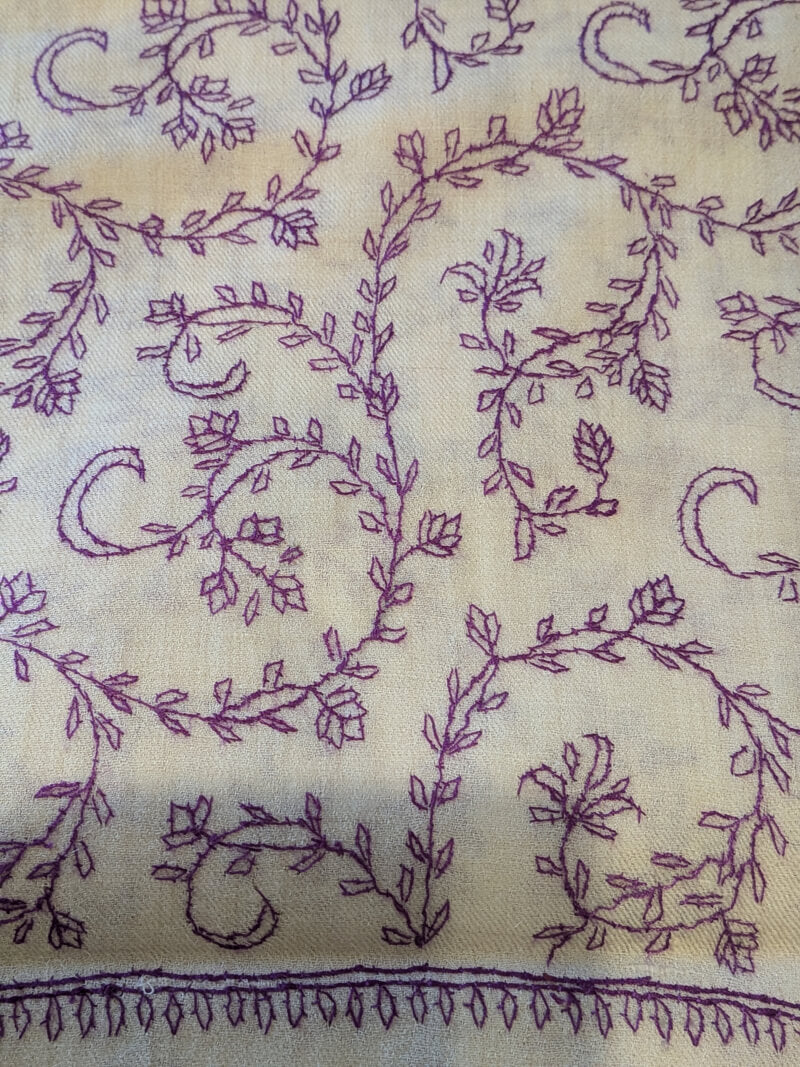
Hand-Embroidered Ivory-Purple Pashmina
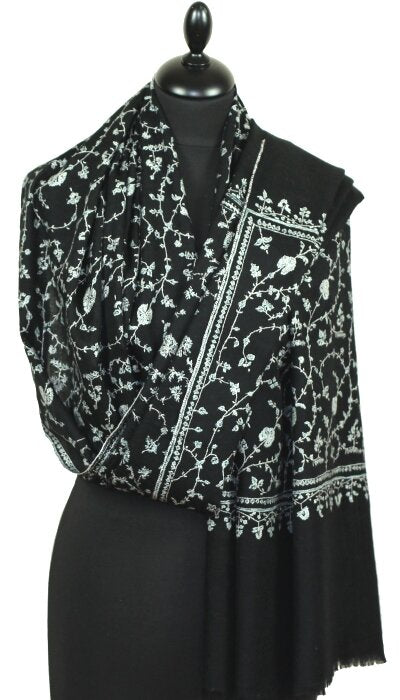
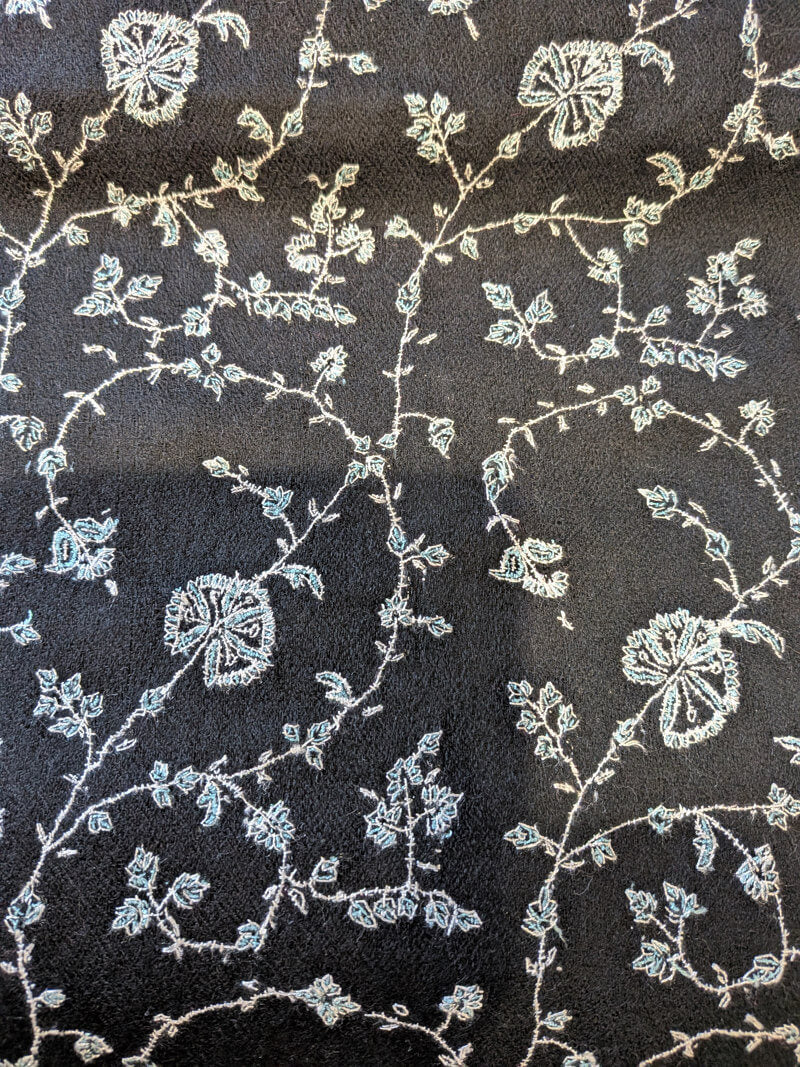
Hand-Embroidered Black Pashmina

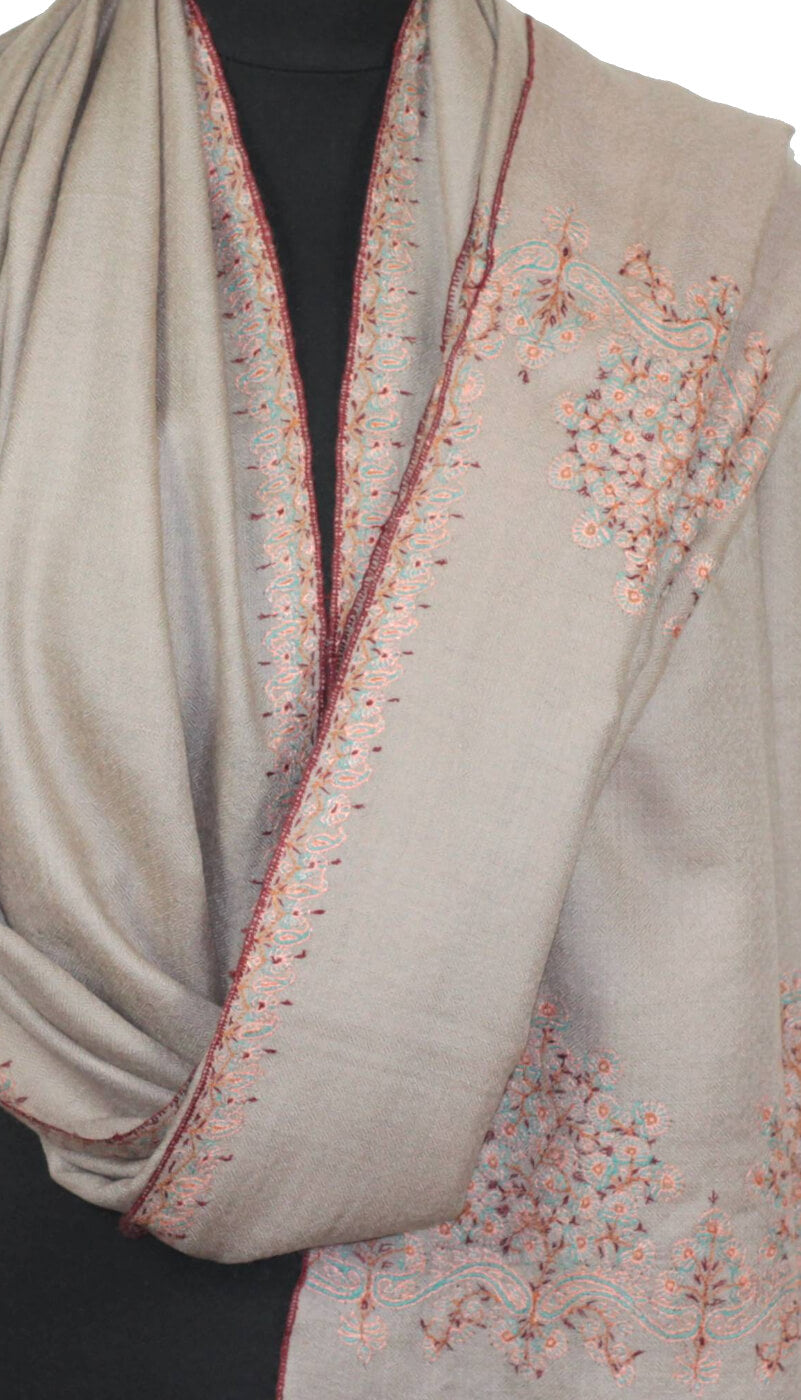
Hand-Embroidered beige Pashmina
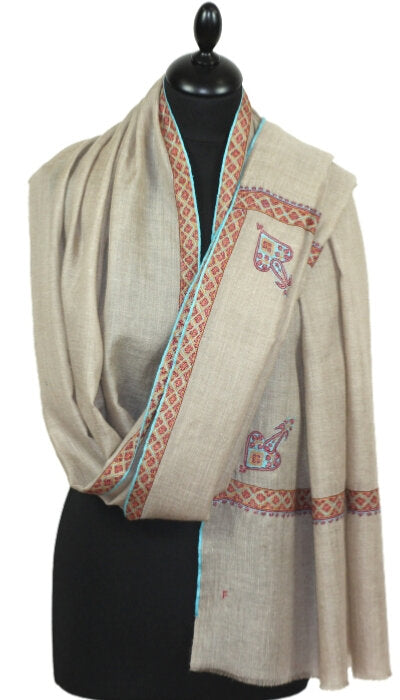
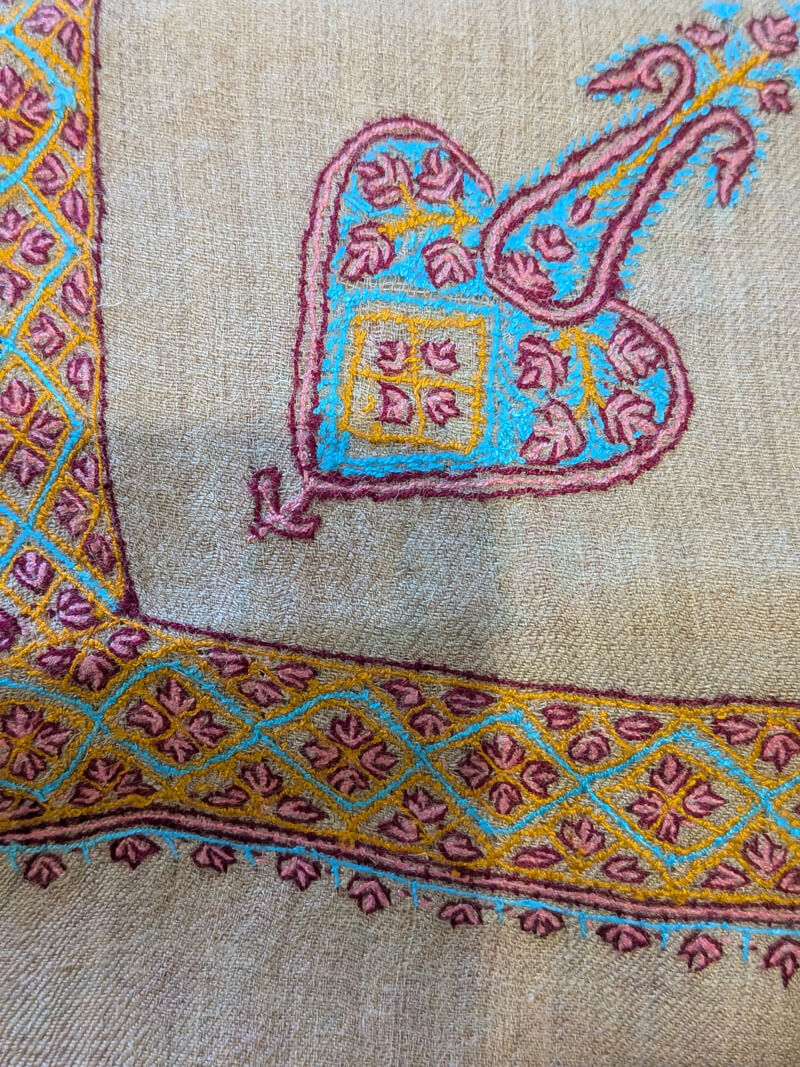
Hand-Embroidered Beige Pashmina
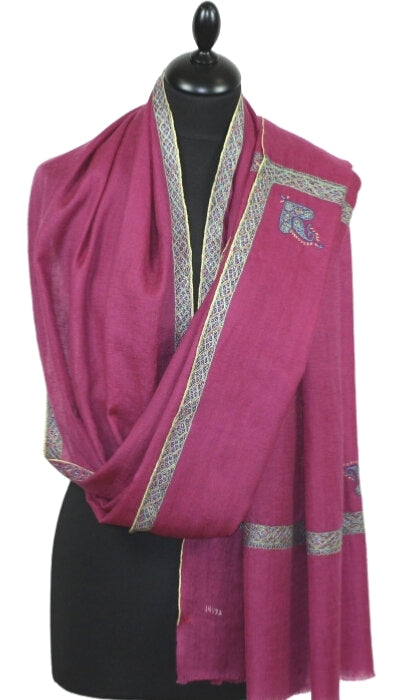
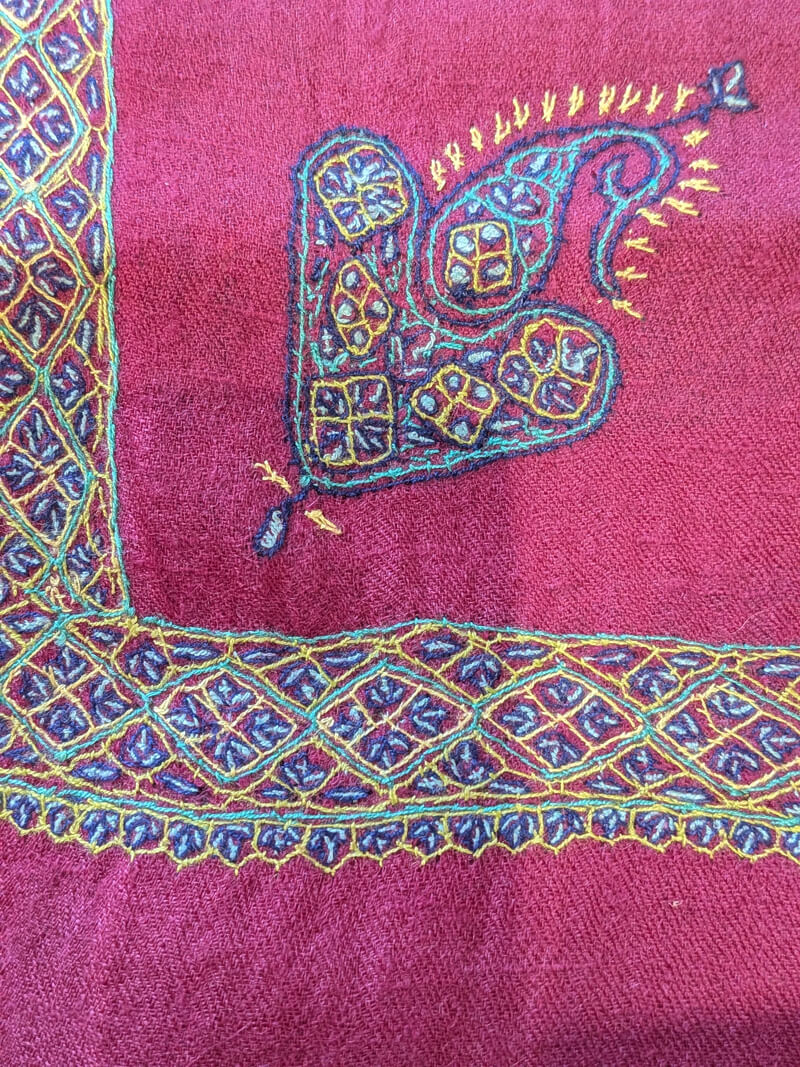
Hand-Embroidered Fuchsia Pashmina
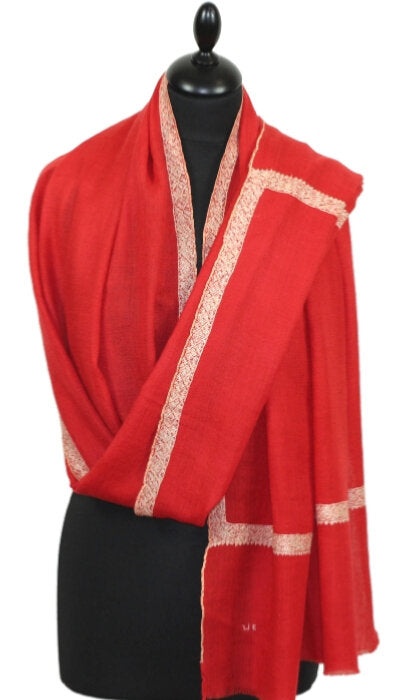
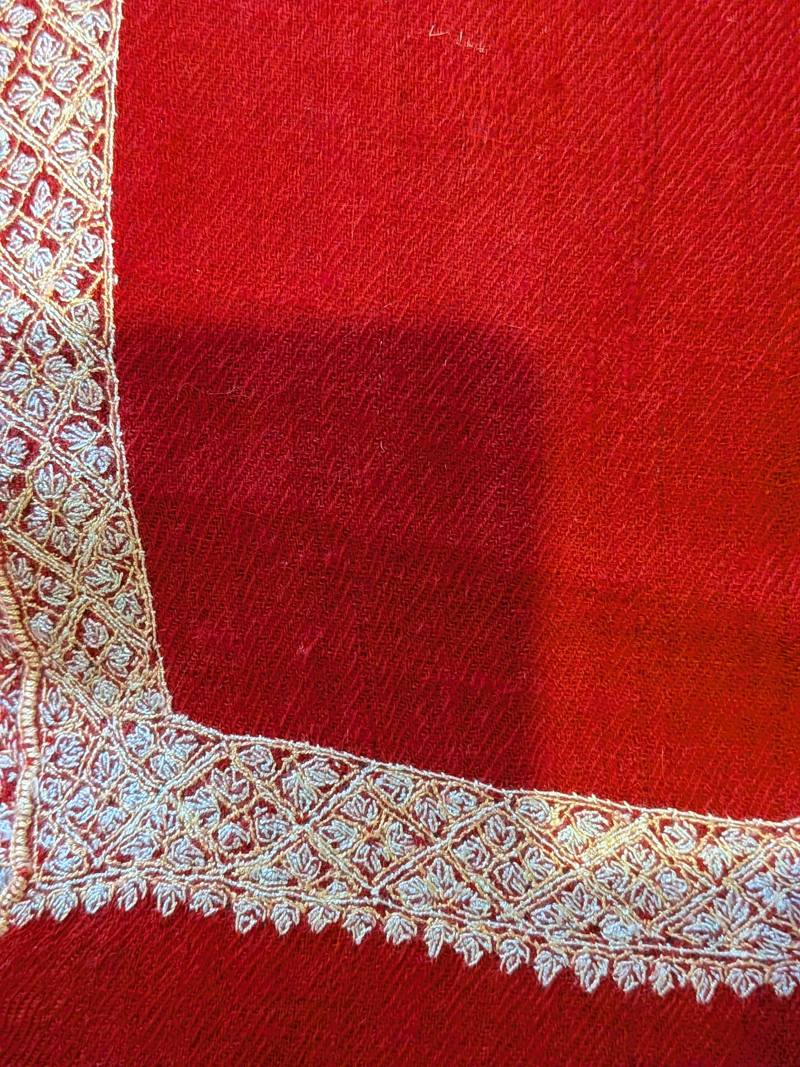
Hand Embroidered Red Pashmina
Frequently asked questions
Hand-embroidered pashminas are often made within families of Kashmiri artisans, using skills passed down from generation to generation. The embroidery is frequently carried out by men, while women are more involved in working the wool and weaving, although these roles can sometimes be reversed. To protect their eyesight and maintain the necessary precision, artisans generally embroider for no more than four hours a day. Each pattern is therefore created patiently, stitch by stitch.
A hand-embroidered pashmina requires highly specialised skills passed down from generation to generation within Kashmiri artisan families. Its creation requires many hours of work, sometimes several weeks or several months depending on the complexity of the pattern. Today, some younger generations are increasingly moving to large cities and choosing careers such as information technology rather than taking up this long and demanding craft. The number of artisans capable of producing these embroideries is therefore gradually decreasing, making genuine hand-embroidered pashminas increasingly rare.
The price of a hand-embroidered pashmina depends on the quality of the fibre, the area covered by embroidery, the complexity of the pattern and the number of hours required to complete it. Multicoloured embroidery generally requires more work than a pattern made in a single colour, particularly because of the numerous thread changes.
A hand-embroidered pashmina should be handled carefully to preserve both the cashmere and the embroidery. Prefer gentle hand washing in cold or lukewarm water with a mild soap, without rubbing or twisting the fabric, then leave it to dry flat. When ironing, turn it inside out and use a low temperature to protect the embroidery. You can also entrust it to a reputable dry cleaner experienced with delicate textiles.